
Making sourdough bread is a rewarding process that connects you to centuries of baking tradition. Whether you’re a seasoned baker or a beginner eager to try your hand at this timeless craft, having the right sourdough bread tools is essential.
This post contains affiliate links, which means that when you make a purchase using one of my links, I earn a small commission at no extra cost to you.
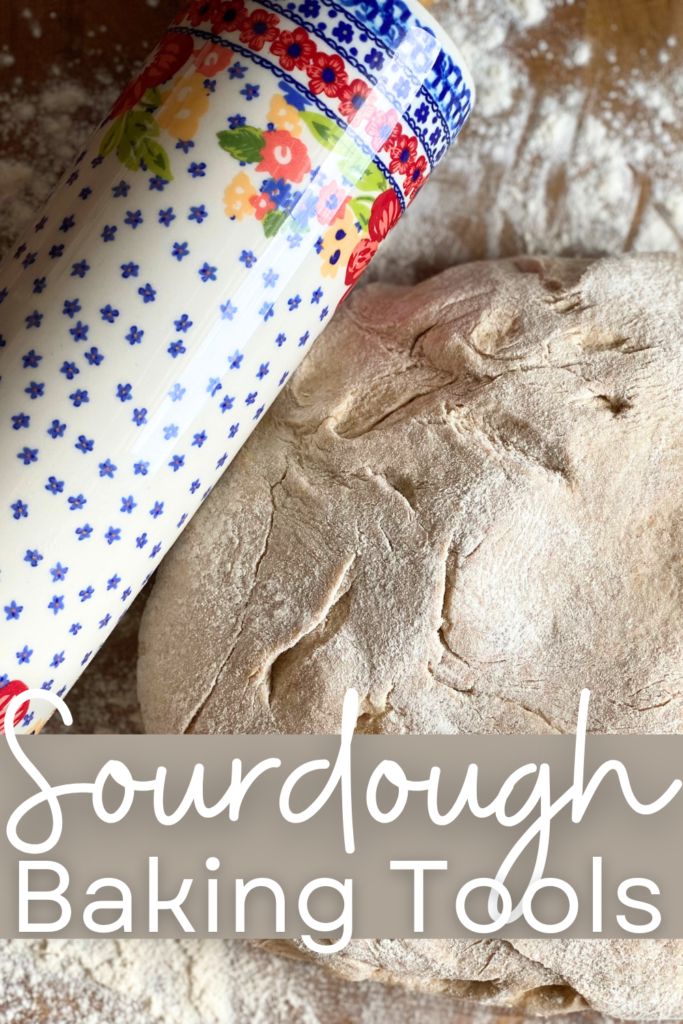
Proper equipment not only ensures consistent results but also makes the process more enjoyable and less intimidating. Below we will explore the essential tools you need to make sourdough bread, as well as a few optional tools that can elevate your baking experience.
1. Sourdough Starter
A sourdough starter is the heart of sourdough bread baking. It’s a living culture of flour and water that, when properly maintained, provides natural yeast and bacteria for fermentation and rising. You can create your own starter from scratch, source on from a friend, or purchase one online.
2. Digital Kitchen Scale
In the past I haven’t used a kitchen scale. It can be helpful for measuring ingredients more precisely and doesn’t add any more work. Sourdough recipes typically rely on grams instead of cups so you will use your scale to weigh your flour, water, salt and starter. It also comes in handy for weighing your dough to split it evenly for multiple loaves. Make sure your scale has a tare function, which allows you to reset the weight to zero after adding each ingredient.
3. Mixing Bowls
You’ll need a set of mixing bowls for combining and resting your dough. Medium to large bowls made of glass, stainless steel, or plastic work great. Glass is ideal because it allows you to see the fermentation process, but any material that is non-reactive and easy to clean will work. A long skinny spoon (called a spurtle) is also handy for mixing. You’ll use it often when you feed your sourdough as well as mixing your dough.

4. Scrapers and Spatulas
A bowl scraper or a spatula is helpful for transferring sticky dough between bowls and a bench scraper is perfect for diving dough into portions. Bench scrapers can also help with handling sticky dough during shaping and cleaning up flour and dough remnants from your work surface. These tools are inexpensive game-changers and will quickly become a favorite in your kitchen.
5. Banneton (Proofing Basket)
A banneton, or proofing basket, is used during the final rise of your dough. These baskets are typically made of wicker or rattan and help the dough maintain its shape. The basket also creates those beautiful spiral patterns on the crust. If you don’t have a banneton, a bowl lined with a clean floured kitchen towel can work as a substitute.
6. Dutch Oven or Baking Stone
One of the secrets to a bakery-style sourdough loaf is a crusty exterior. This is achieved by trapping steam during the first part of the baking process. A Dutch oven is ideal for this, as it provides a sealed environment. Choose one with a lid that can withstand high temperatures.
If you don’t have a dough oven, a baking stone or steel can also work. To generate steam, place a pan of water on the oven’s bottom rack or spritz the inside of your oven with water just before baking.

7. Lame or Scoring Tool
A lame is a tool specifically designed for scoring dough. Scoring allows the bread to expand properly in the oven and creates decorative patterns on the crust. A lame typically has a sharp blade attached to a handle, but a sharp knife or a razor blade can also work. Ensure the tool is very sharp to prevent tearing the dough.
8. Dough Whisk
A dough whisk is a specialized tool for mixing sourdough. Its wire loops are designed to cut through thick, sticky dough with easy, preventing clumps and incorporating ingredients efficiently. While not essential, its a great tool for bakers who make sourdough frequently.
9. Thermometer
An instant-read thermometer is useful for checking the temperature of your dough as well as the temperature of your bread while baking.
10. Sourdough Bread Slicer
A sharp bread knife is a must for sourdough bread. It will help you cut through the thick, crusty exterior of the bread without smashing it. You can use a regular bread knife, or choose a knife specifically made for sourdough. There are also manual, hand crank bread slicers that can come in handy.

Optional Sourdough Bread Tools
- Silicone Baking Mat – A silicone baking mat is a non-stick surface that makes shaping and handling the dough easier. It also helps keep your work area clean. If you don’t have one of these you can use parchment paper for the same effect.
- Stand Mixer – While many sourdough bakers prefer to mix and knead by hand, a stand mixer with a dough hook attachment can save time and energy, especially for large batches.
- Proofing Box or Heating Mat – If you’re serious about sourdough, a proofing box or heating mat can help you control the temperature of your dough during fermentation and proofing, leading to consistent results.
- Spray Bottle – A spray bottle filled with water is handy for creating steam in your oven or keeping your dough hydrated during shaping.
Sourdough baking is a journey that combines science, art and patience. Using these tools for sourdough bread, you’ll be well equipped to produce delicious loaves that rival those from professional bakeries. Start with the essentials – like a digital scale, banneton, and dutch oven – and gradually invest in additional tools as your skills grow. Before long, you’ll be pulling beautifully crusty, tangy sourdough loaves out of your oven and sharing them with family and friends.

Once you have all the tools you need, try making this simple sourdough bread and let me know how it goes!
Leave a Reply